
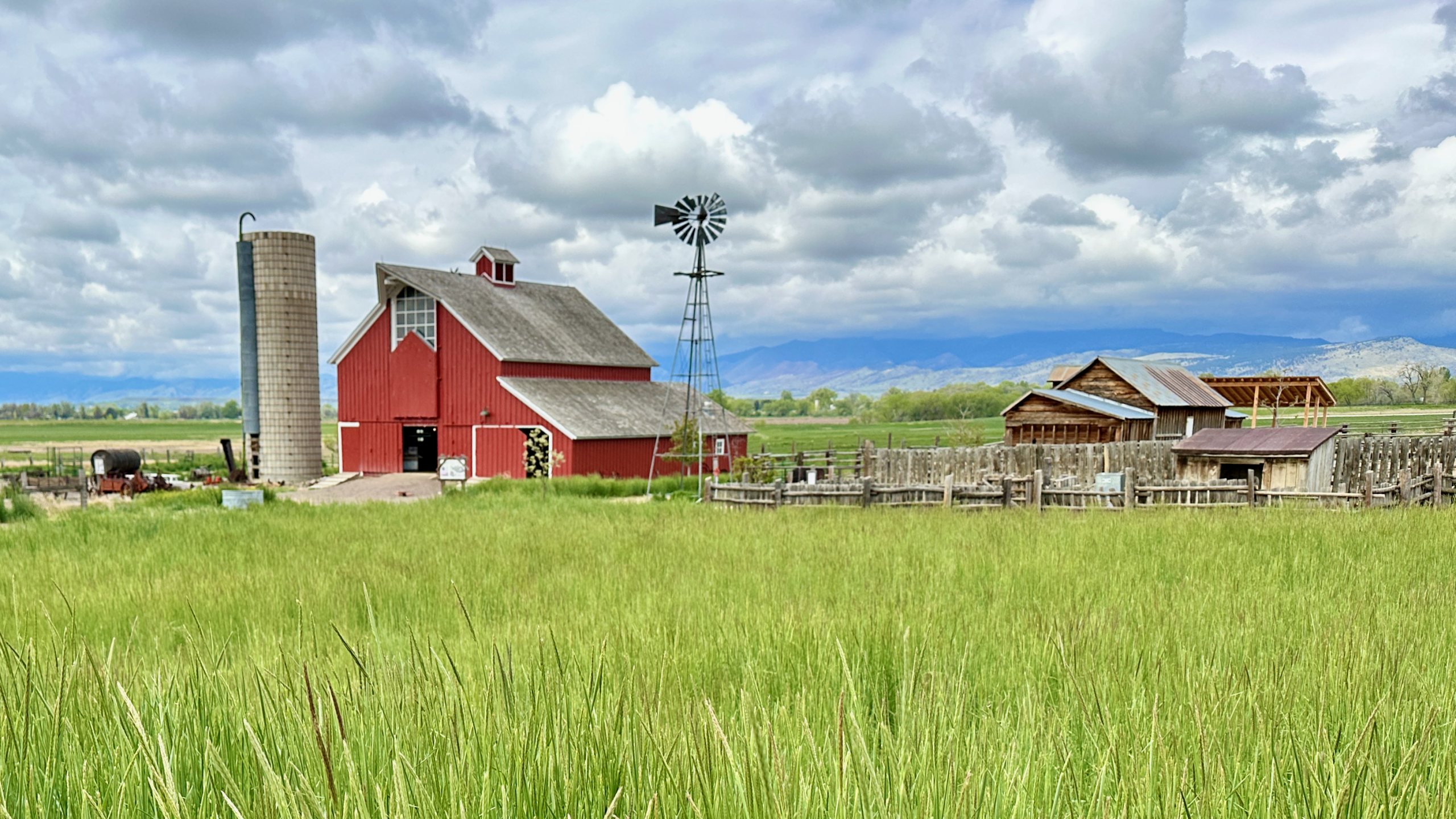
Last weekend I volunteered to do a handspinning demonstration at my local Agricultural Heritage Center, a preserved ~150 year old homestead and farm that is open to the public. They were having a big event for kids and families, with farm animals, hands-on crafts, demonstrations, activities, and even a taco truck. For this event, they set me up in one of the barns with some of their interactive exhibits and a few other craftspeople. I was thankful to be in the shade, because it was almost 100 degrees F out there by lunchtime. The blacksmith must have been absolutely roasting in his little shop.
I brought over my Ladybug spinning wheel and a couple of drop spindles, plus a basket of fiber, handspun yarn, some spinning tools like bobbins and snips, and a few hand knitted garments. My goal was to illustrate the entire process roughly as it was 100+ years ago, from live sheep to items farmers used (and we still use) every day like socks and mitts. Helping people make that connection between history and their everyday lives feels almost magical.
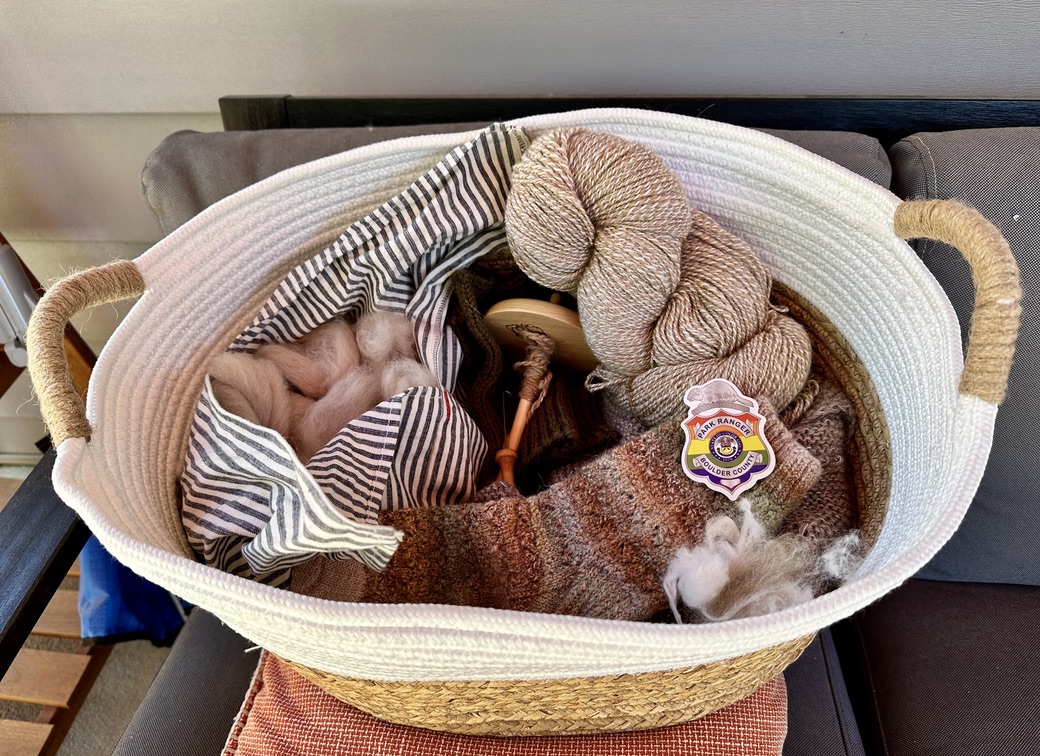
I soon realized that the fiber that was already on the Ladybug wasn’t really going to work for this purpose. It’s a fine, soft undyed merino that spins like a dream. But with lots of kids and curious adults around and expecting some hands-on interactivity, I decided to switch over to some more context-appropriate coarser wool that came from the sheep on the farm. There were bins full of unwashed locks, but I chose a roll of wiry, flat roving-style wool. It might have been washed and machine-carded, but it was compacted, smelled like a barnyard, contained lots of vegetable matter, and felt sticky with lanolin and/or suint. I also had some fresh angora floof, thanks to a lady doing a rabbit demo, and it was fun to let people feel the difference between the soft bunny cloud and the wiry, waxy sheep’s wool.
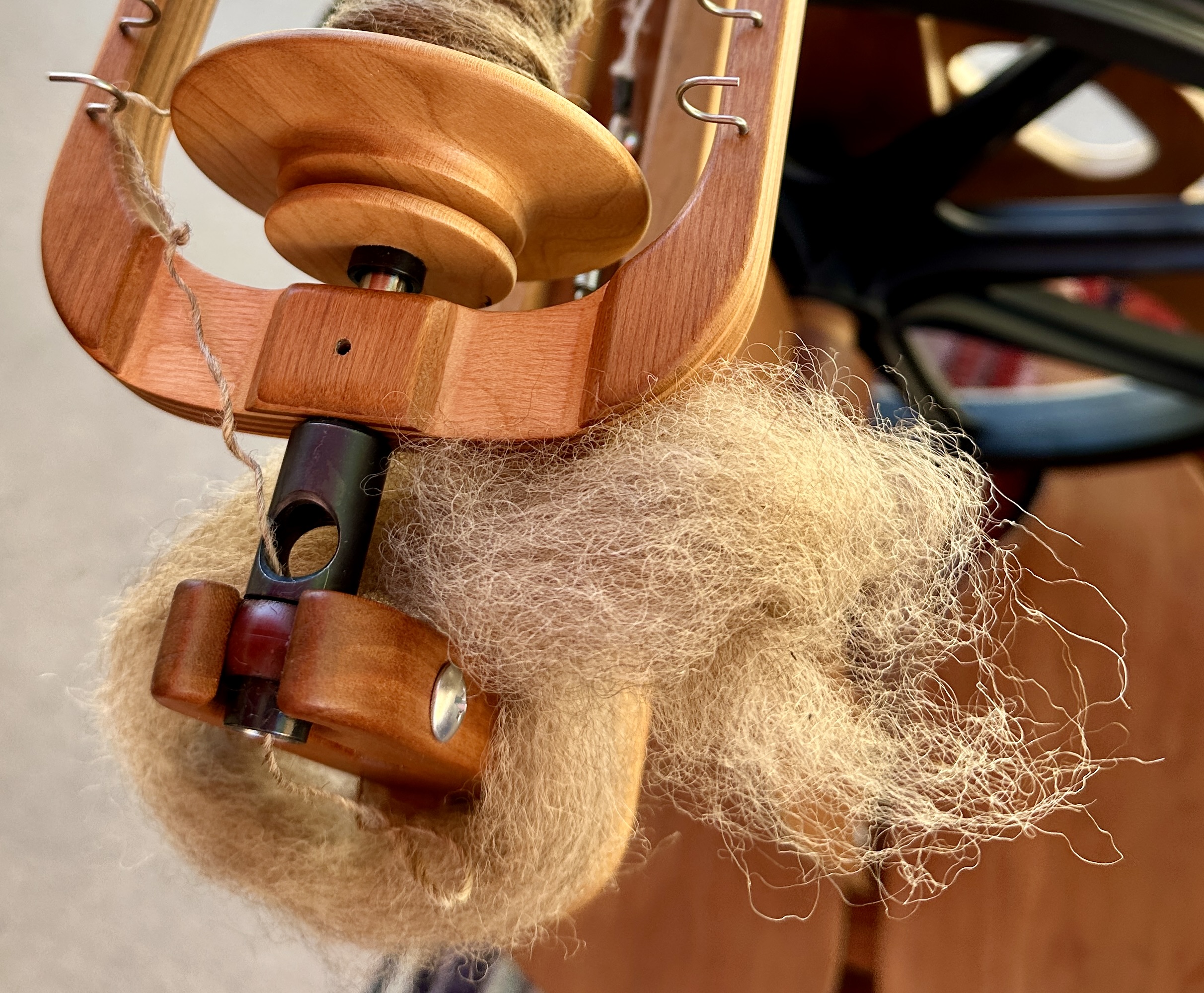
With a little pre-drafting, the farm wool wasn’t bad to spin. Over the course of the day, I spun up about a third of a bobbin’s worth of the coarse wool, plus some brown alpaca I had in my basket and the bunny angora. I taught a few people how to use a drop spindle, which was an adventure because I kind of suck at it, but I eventually got in the groove.
There was another, much more experienced spinner there, who was amazing with people. I learned a lot just from spinning next to her while she taught kids a little hands-on wheel spinning. She gave them the job of gently feeding drafted fiber into the orifice, while she drafted and treadled. This is something even small kids can do, and boys and girls alike were a bit enchanted with the process. She then made them little plied-back bracelets with the very yarn they had “spun”. She even let a few of the curious adults sit at her Matchless, and guided them through a bit of basic spinning. It was fun to watch them light up when they got it going. One of them turned out to be a reporter for a local newspaper, and she interviewed us together afterwards. Someday I would love to be as relaxed, confident, and knowledgeable as the other spinner was.
I, on the other hand, was a bit awkward when it came to interactions. I was pretty good at explaining the basics, like what staple length is, how drafting works, and how twist is the magic ingredient that holds fibers together to become yarn, or rope, or thread. I talked about the history of spinning easily. Both kids and adults asked some really great questions, like why I was treadling slow but the bobbin was spinning fast. My brilliant answer? “Physics.” Ugh. Someday I will learn how to talk to people.
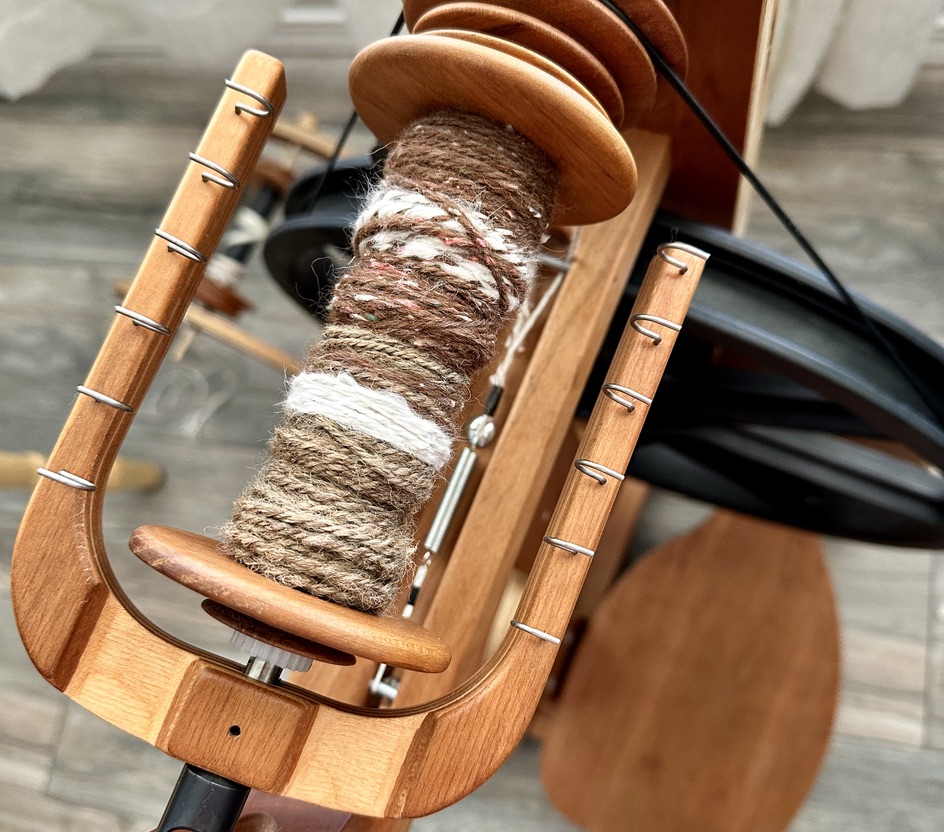
The next day, I decided to chain ply what I had on the bobbin to see how it looked. The grayish stuff on the bobbin is the farm wool, the warm brown is alpaca, and the white is angora. It’s untidy but not terrible.
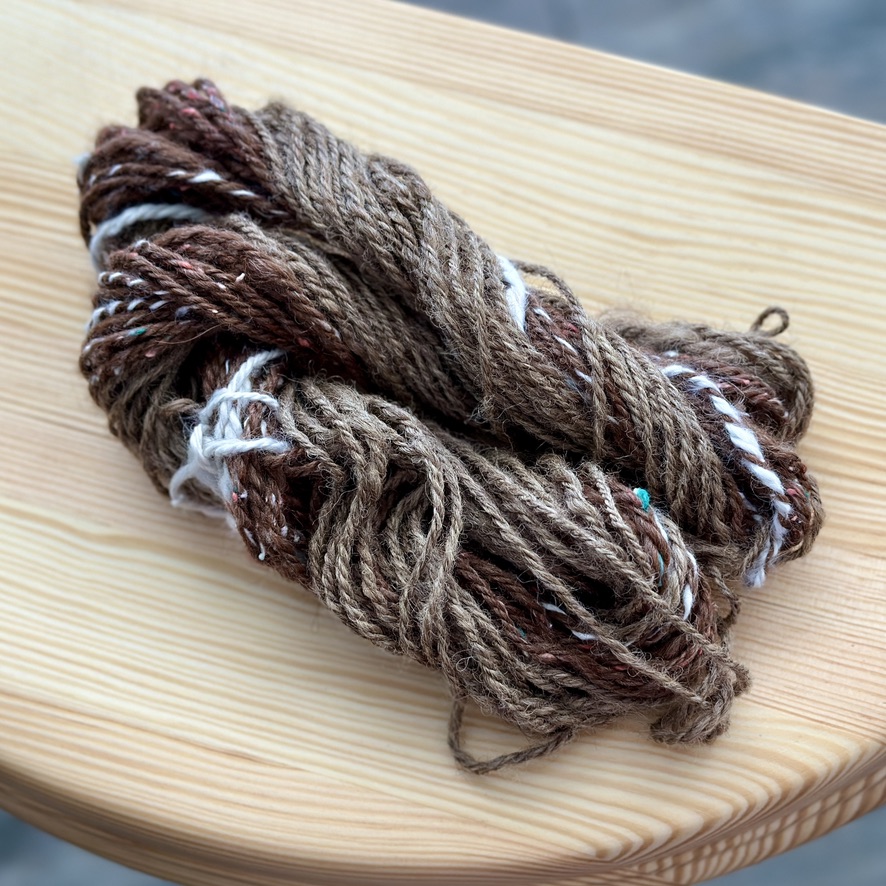
My next step was skeining, and and the result is pretty rough and twisty.
The next step is where it got gross: washing. After the first bath with wool wash, the water was…well, tea-colored.
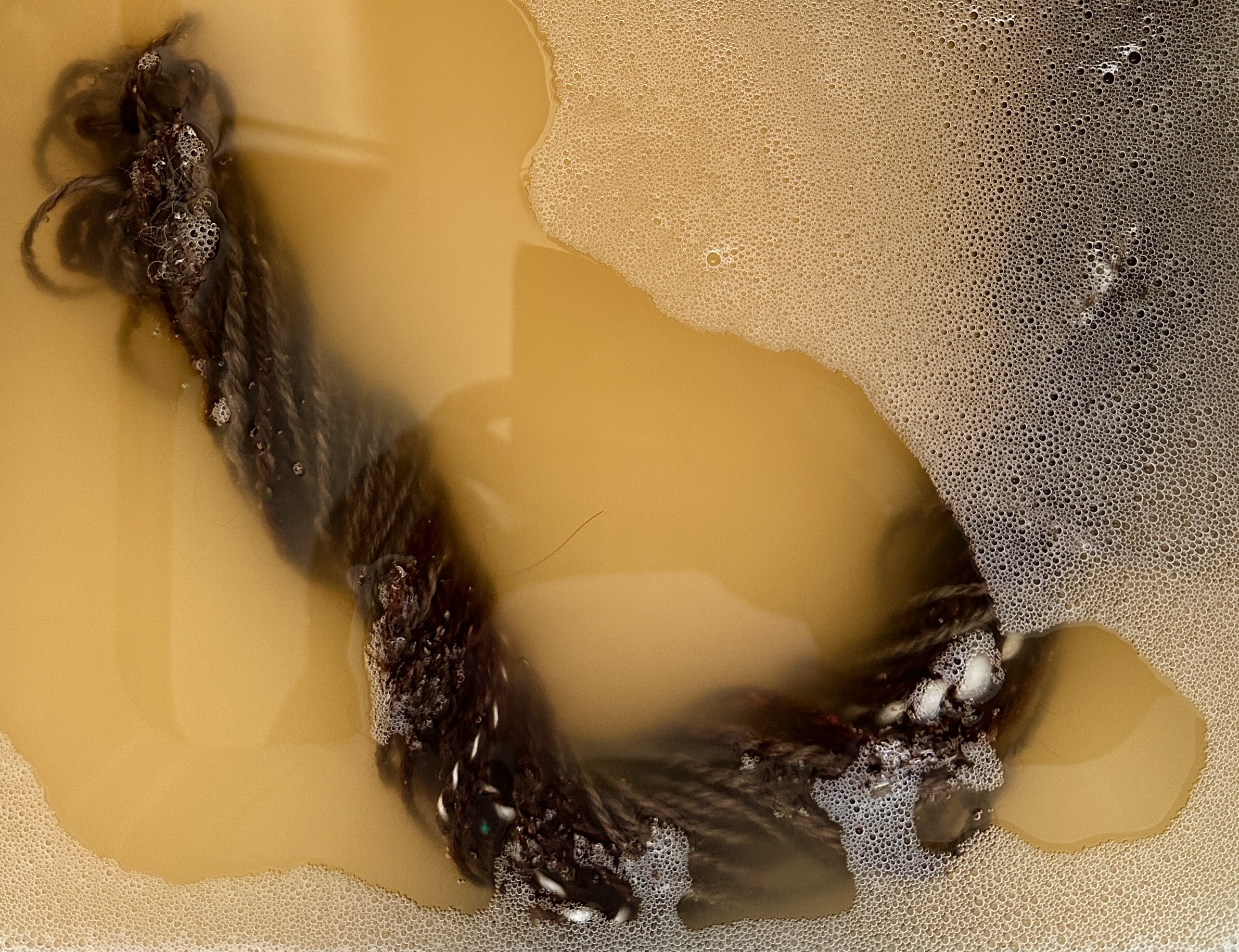
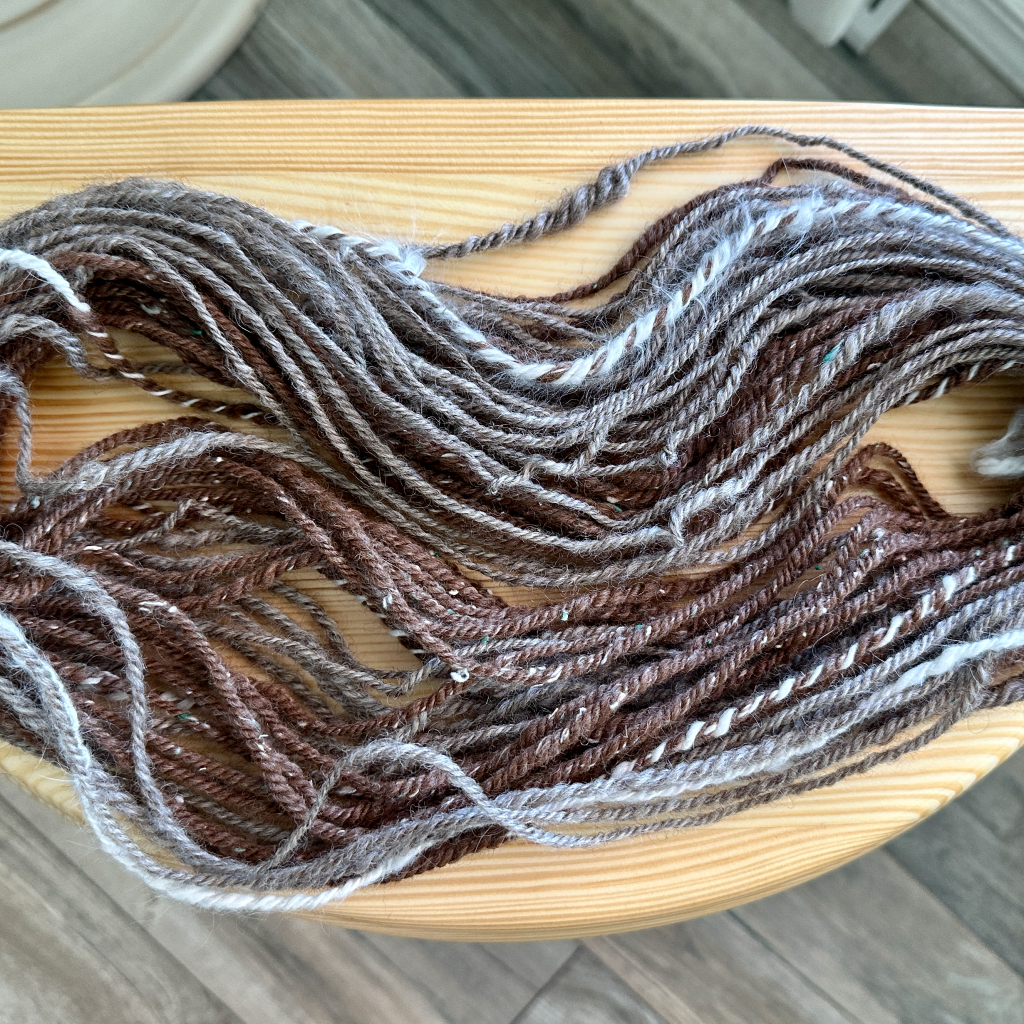
I washed it again with dish soap, which was better, and then after the third wash, the water was clear. I squished the yarn in a towel to get the excess water out, snapped it a few times, and hung it to dry. It came out much softer and not at all twiney or greasy.
I reskeined this yarn using a swift that has a handy counter on it, and it’s 40 yards. It’s not enough yarn to knit much of anything with. I did make an attempt to weave a square with a pin loom, but it’s just not made for yarn of this weight, and the angora floof stuck to everything. That tangled mess is destined to become compost. But I can give the small remaining yarn ball back to the farm so they have an example of their own finished yarn.
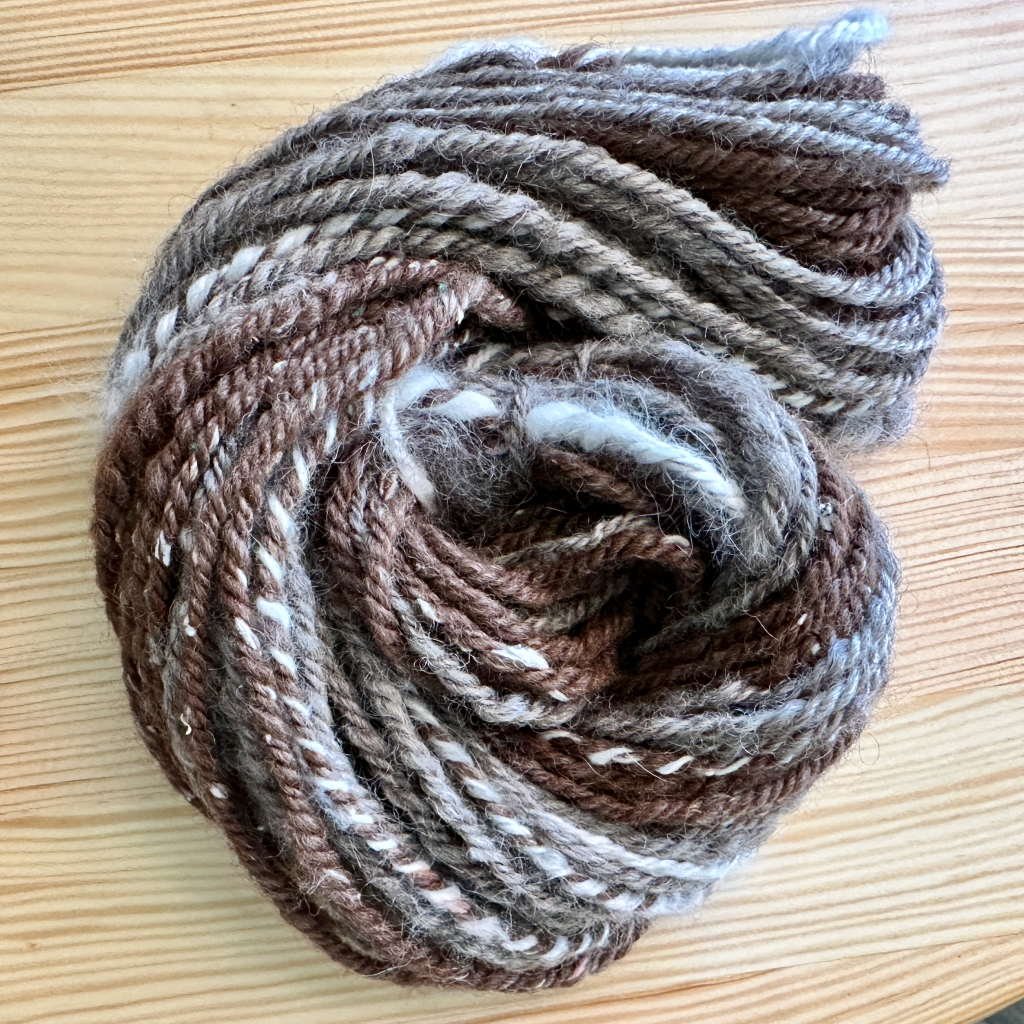
Overall, participating in this event was a lot of fun, while also being humbling in a way. I was reminded that spinning as a hobby rather than an everyday necessity is a privilege, and commercially-prepped fiber is a luxury, compared with what my great-grandmothers spun (below is a whole post about that) around the same time the Agricultural Heritage Center was a fully working farm. Using clean combed top or batts in breathtaking hand-dyed colors, and using inspiring, beautiful quality tools has probably spoiled me. Although I’ve been handspinning for five years and can produce a pretty nice skein, I still have a lot to learn. I’m not ready to give up my modern equipment, but trying some less-prepared and different fibers would give me a wider perspective and could make me a better spinner.
Leave a Reply