Connecting with the handspinners who came before me.
As a bit of a history nerd, one of the things I like about handspinning is that it makes me feel connected to the generations of spinners around me and before me, across more than a thousand years and hundreds of different cultures around the world. There is evidence that spinning wheels were used in India as early as the year 500 CE, in the Middle East and China by 1100, and in Europe about 1300. Drop spindle spinning goes back much, much further. Think about it: From as far back as we can measure, on every continent, fiber has been twisted together to make everything from the thickest, strongest rope to the finest embroidered silk fabric.
Note: It’s occurred to me that this is a pretty long article. Tl;dr is that the family spinning wheel pictured below, dated 1786, was given to my 3x great-grandmother. It was passed down through the generations for another ninety-six years, and this is a personal connection to spinning, for me. If you’d like all the historical details including names, places, and photos, please read on!
The historical connection, for me, is also a little more personal. This photo shows my very determined-looking great-grandmother Clara at the spinning wheel, with her sister Allie at her side. It looks to me like they are about to replace the missing or broken drive band. The sisters were born in Wisconsin, Allie in 1881 and Clara in 1887, and this photo was taken sometime around 1960 when they were in their 70s.
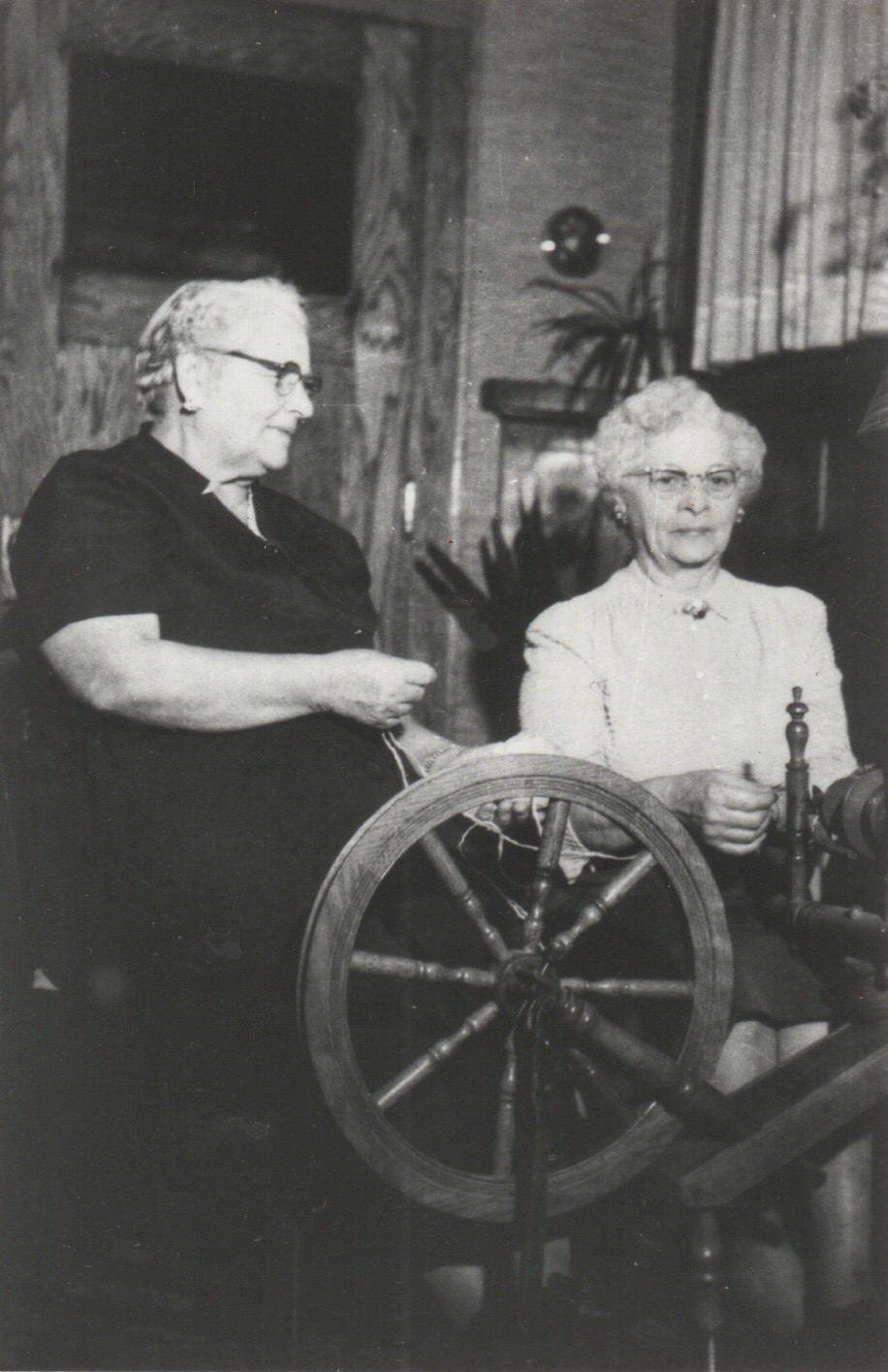
According to a family tree booklet compiled by a cousin in 1955, the family spinning wheel was given to Allie and Clara’s grandmother Anna Sophia soon after she arrived in Wisconsin. The family had emigrated from the Lake Schwerin area of Mecklenburg-Western Pomerania, now part of Germany, in 1865.
“The baby was about four years old when they decided to sail for America. Several other friends and relatives came with them. Some of them died of cholera on the voyage. Upon arriving in America, Frederich and Anna Sophia settled in Erie, Pennsylvania, near a bachelor brother. Four weeks later Frederich died of typhoid fever.”
So Anna Sophia was left widowed, in a strange country, with three little girls. About six months later, she packed up all their belongings and moved to Waukesha, Wisconsin, where two of her brothers were living.
“An old Mrs. Simpson gave Anna Sophia the family spinning wheel. It was already a very old wheel. It is dated 1786. Anna Sophia worked very hard to make a living for her little family. The living was very scant. In the winter there was little food and fuel. Agusta, the youngest, went to bed during the daytime in order to keep warm. For dinner she would eat the vegetables near the center of the stew pot because they weren’t frozen.”
While there were woolen mills in Wisconsin around 1866, particularly after the Civil War, purchasing yarn or fabric from a mill may have stretched the family’s means. A home spinning wheel would have made yarn to knit or weave clothing with, or to supplement their income. At that time there were still very few socially acceptable careers for women, even widows.
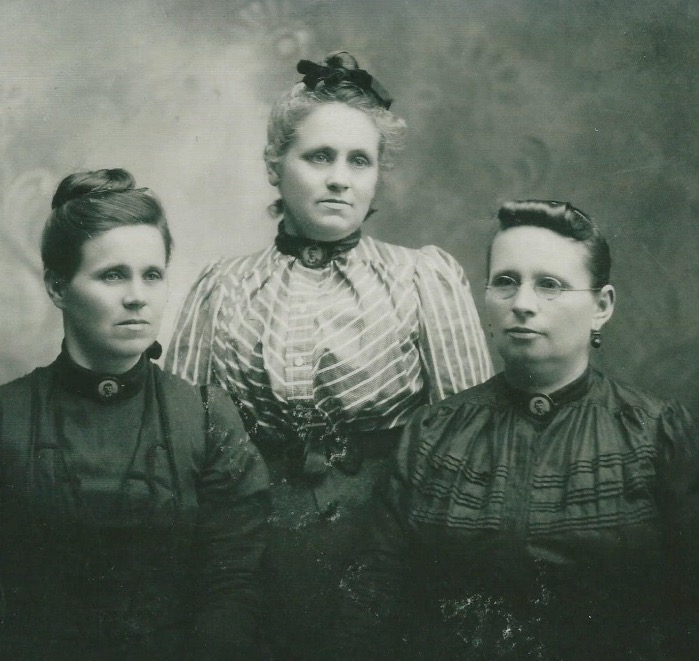
That youngest daughter, Agusta Christina Hannah Anna Wilhelmina (!), grew up in Wisconsin. When she was eighteen, she married a farmer named Edward, whose parents had also emigrated from Pomerania. Agusta and Edward had seven children together, including Clara and Allie. Wisconsin German was probably spoken at home, in school, and other public venues due to the large German community in Wisconsin at that time (about a third of the population).
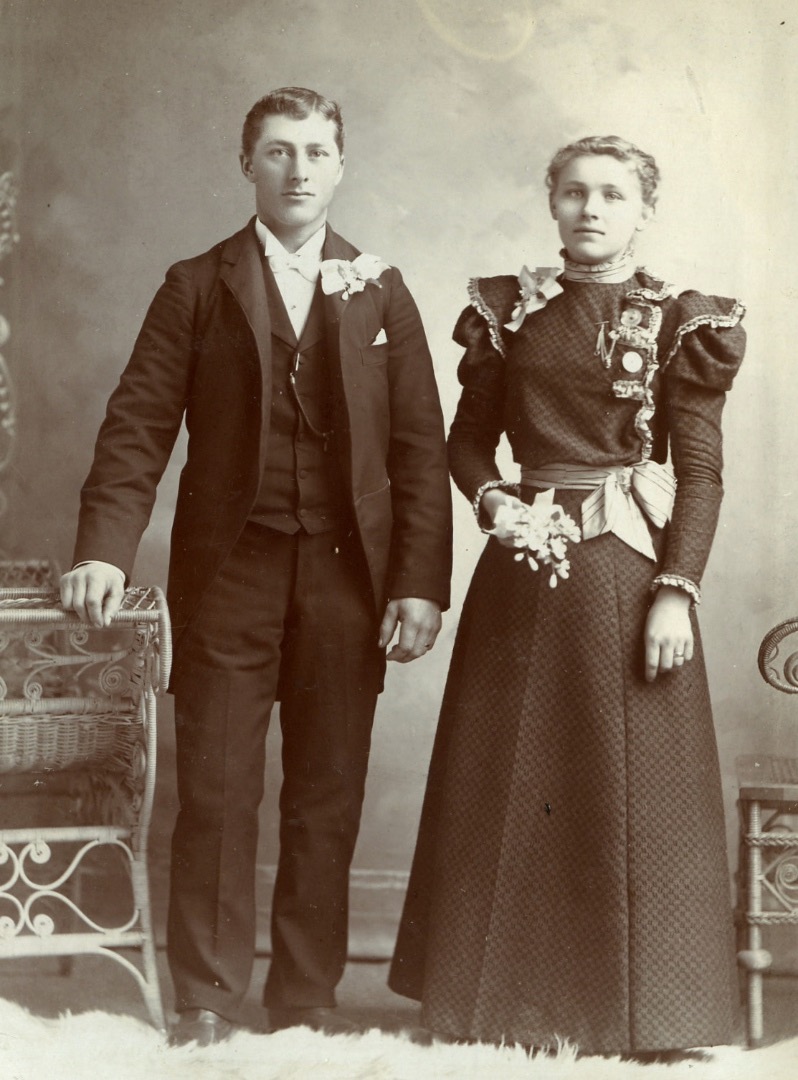
Tragically, Edward was killed in 1901 at the age of 45, when he was partially decapitated in a cream separator accident — dairy farming is no walk in the park. Agusta moved the family to an 80-acre farm they had purchased the year before and finished raising the six children still at home, ages 1 to 16. It must have been incredibly hard work. Reportedly Agusta helped with the grain threshing in the fall and shocked the bundles at night. We can’t know for sure, but I imagine she inherited the family spinning wheel when her mother died, if not before.
Agusta’s eldest child, my grandmother’s aunt Allie, was twenty, married, and pregnant with her first daughter when her father was killed at the dairy. Allie and her husband Edward (confusingly, the same name as her father) had three children, nine grandchildren, and 23 great-grandchildren before her death at the age of 85. The family tree booklet has a dedication to Aunt Allie along with a drawing of a spinning wheel, so it may have been hers or significant to her.
Clara, Allie’s youngest sister and my grandma’s mother, was just fourteen at the time of her father’s grisly death. At the age of eighteen she married Fredrich (all of the men were evidently named Ed or Fred), a dairy inspector and also the son of Prussian immigrants, and they went on to have nine children together.
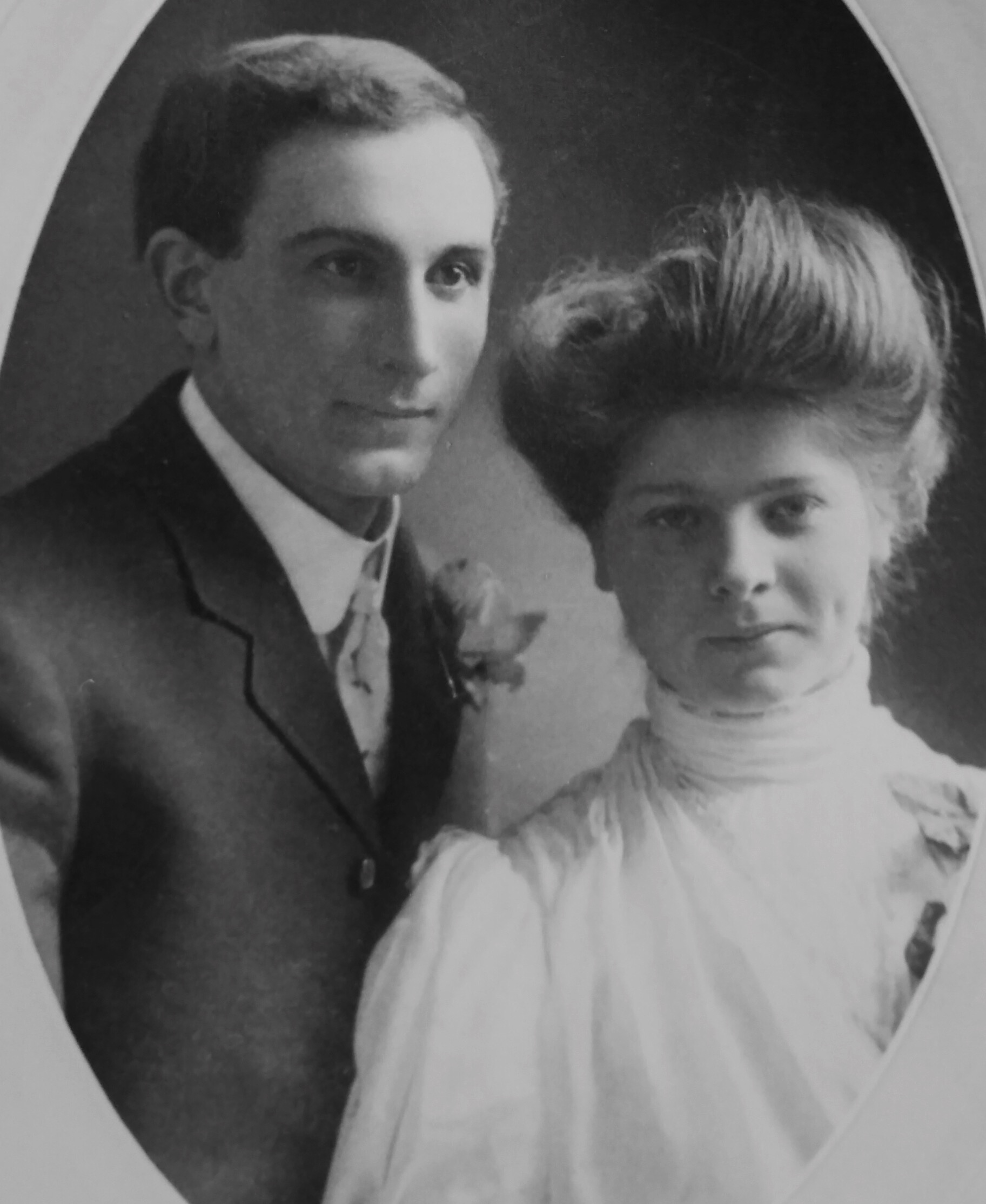
The family reportedly still spoke German in the home at least until WWII. We believe they became involved in a fundamentalist Russellite sect. Their youngest child, Buddy, died before he turned two because their religion prohibited the new diphtheria vaccine. Clara and Fredrich both lived into their seventies. If Clara inherited her mother’s spinning wheel, it may have been later in her life. Home knitting and handspinning were still popular in the postwar years.
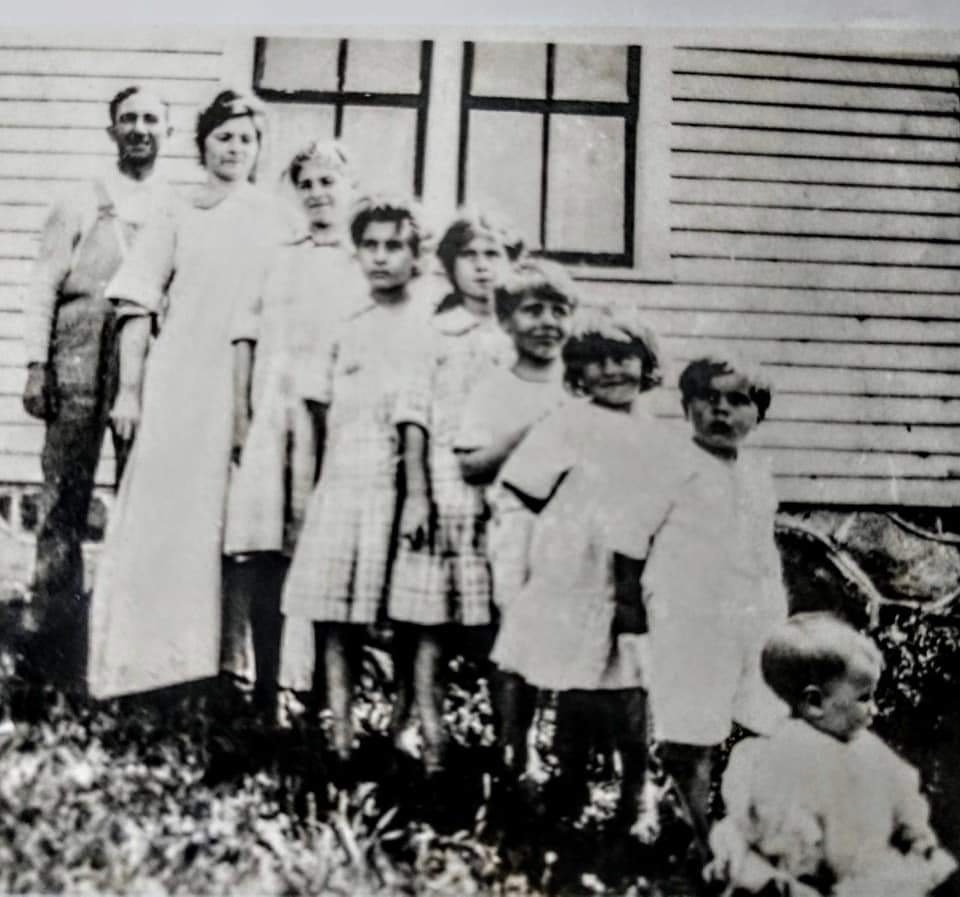
When Clara died suddenly in 1962, her youngest surviving son (the baby in this last photo) moved into her home and rapidly sold off all of her property. The fundamentalist religion had created a rift in the family, and the siblings who rejected it (including my grandmother, who was known to be a bit of a rebel) were shunned and therefore not consulted about their mother’s belongings. Nobody can recall having seen the spinning wheel since then, so it was probably sold at that time. Sixty years later, I hope it found another family to care for it and make many happy fleecy yarns with it.
We may never know whether it was Allie or Clara who inherited the family spinning wheel from their grandmother, nor what became of it when they died. If the spinning wheel is still around, it’s 238 years old now! Alas, any family members who would remember where it ended up are long gone. But in any case, I have enjoyed exploring the story, and it inspires me to keep spinning on my modern spinning wheels and connecting with the generations who came before me.
Leave a Reply