
What do you do with an aggressive rooster?
Trigger warning: Discussion of chicken mating, hen injury, and rooster eviction.
Back when we lived in Georgia, we had a 5-acre farm in a very rural area. On this farm we had 42 chickens (E-I-E-I-O). But we started out with only three.
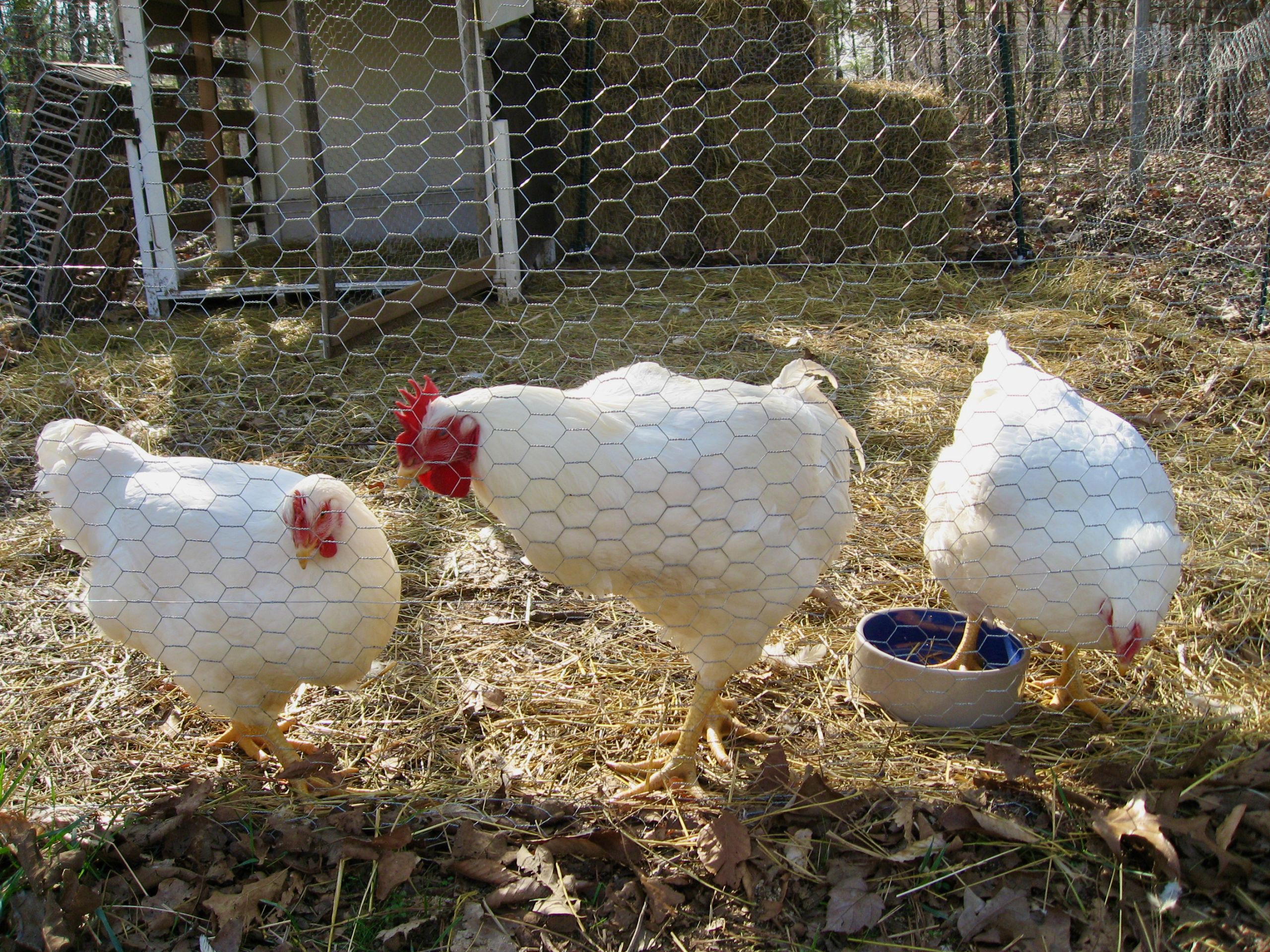
One late March, when spring is soft and temperate in north Georgia, our neighbors offered us three young white chickens. I declined to accept them at first, but my high-school-age son semi-pleaded with me, saying the chickens needed a home and we had plenty of space. The neighbors even offered to throw in a small makeshift chicken coop made of pallets. I thought it might be good to have a few fresh eggs, at the very least, so I relented. We went down to the feed store and got some chicken feed and chicken wire fencing, built a quick enclosure, propped up the rickety pallet coop with hay bales, and embarked on our chicken journey.
I knew one of these white chickens was a rooster, and I knew roosters were noisy, but that was the extent of my chicken knowledge. I took to the internet to learn more, and discovered that chickens are roughly divided into two sorts: egg layers, and meat birds. Guess which kind we had? We weren’t going to get many eggs from these hens.
Turns out that meat chickens (commonly Cornish Crosses) are bred to grow to full maturity at just four months old. The goal is to make them grow as big as possible while they are still young and tender to eat. As a result, it’s rumored that meat birds sometimes even get too heavy for their legs to hold them up, which is not at all humane. We decided that we’d name them George and hug them and pet them … well, that we’d take good care of them and everything would be cool.
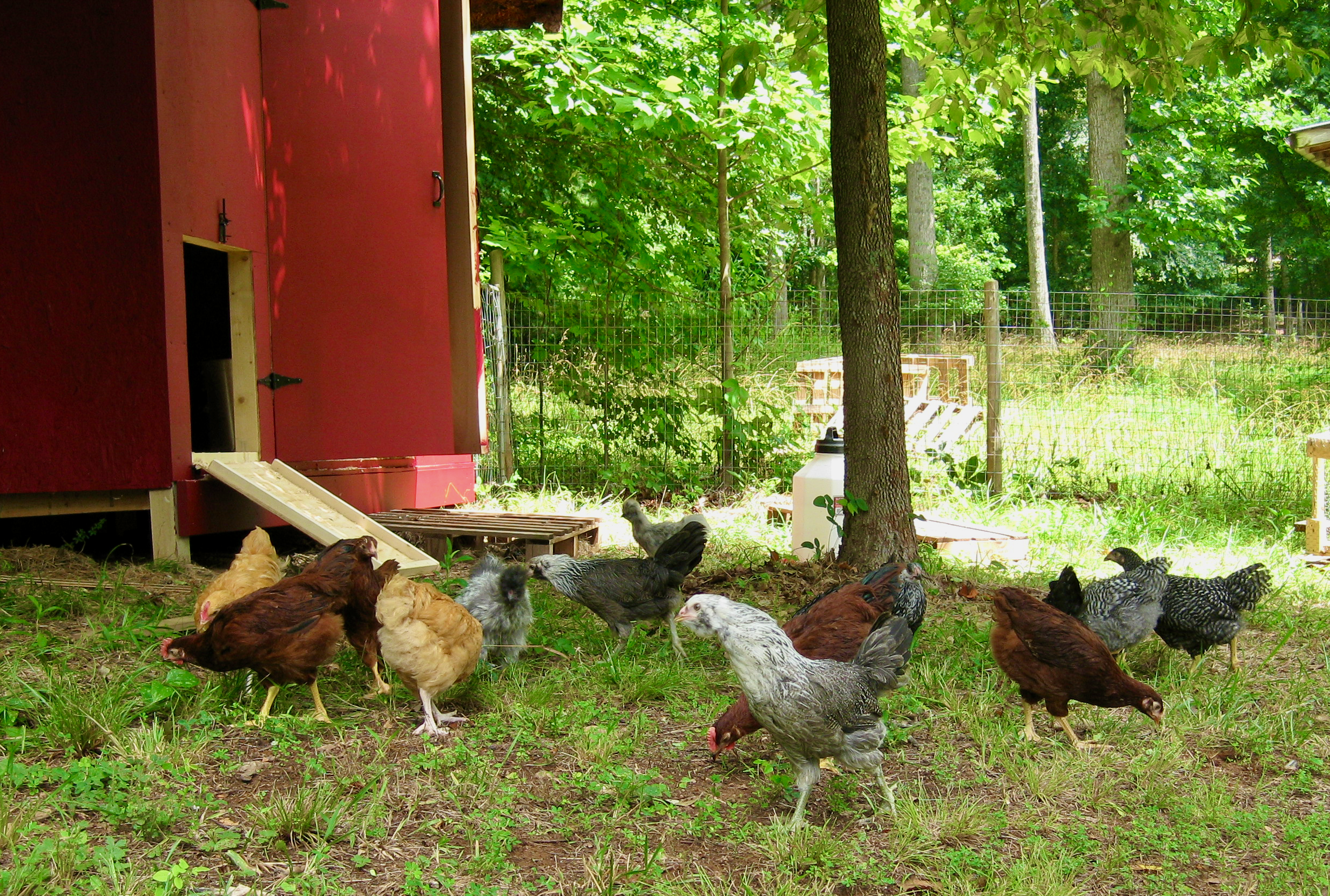
In April, our local feed store hade some adorable little baby chicks for sale. Since we were already invested in this chicken thing, we got some chicks that were egg laying breeds – Araucanas, Barred Rocks, Rhode Island Reds, Buff Orpingtons, and just for fun, some tiny Muppet-looking chicks called Silkies. I picked out a few of each breed because baby chicks are tender little creatures and a lot of them don’t make it out of chick-hood. We built them a brooder, which is a chicken-wire cage with sawdust on the floor and heat lamps to keep the chicks nice and cozy without their mama hen to keep them warm. We kept the brooder in the garage while we converted an old hay shed into a bigger chicken coop. You can already see that this chicken adventure was snowballing.

At the end of May, when the honeysuckle and tulip poplar and magnolia bloom and the coyotes get hungry, one of the Cornish Cross hens became a coyote snack. So the next step was fencing in a space using proper steel livestock fencing for protection, between the overgrown horse paddock and the pasture fence. This enclosed both chicken coops and gave them about a half-acre yard. After recovering from digging all those fuckin’ post holes in heavy Georgia clay soil, we let the remaining meat birds out of their little area and into the big yard. We named them Lucille and Earl.
In June, when the little pullets and cockerels were about 3 months old, we moved them to the big chicken coop and yard with Lucille and Earl, and they all lived happily ever after. Um… nah. That would have been too easy. But the transition, well supervised, was pretty uneventful. And the little cockerels learning to crow was one of the funniest things I have ever heard.
At this point the meat birds were almost fully grown, and with chicken maturity comes chicken mating. The rooster does a little courtship dance, gives the hen a few little pecks, and if she’s into it, she crouches down so the rooster can do his thing. (If she’s not into it, the rooster often chases her down and does it anyway. Ugh.) He hops onto the hen’s back, grabs onto her sides with his feet, and gets a good grip on her neck feathers with his beak. After that, all they have to do is touch cloacas (butts) and it’s done. Start to finish, the whole thing takes about ten seconds. Other than maybe the loss of a few feathers, it’s usually no big deal, and the hen goes on about her day. Anyway, Earl started hopping on top of Lucille on a regular basis. As the younger hens started to mature, he started mating with them too, even though they were hesitant. But Lucille was always clearly his favorite, maybe because some of the younger girls could easily outrun Earl’s fat ass.
With chicken maturity also comes rooster aggression. It’s their job to protect the hens, so a certain amount of fuck-off-ishness is required, but a few times Earl came after me when I went into the chicken yard. He never successfully attacked me, but that’s only because I saw him coming. If you’ve ever seen rooster spurs, the large razor-sharp spikes on the back of their legs, you’ll know how terrifying it was to see this feathered beast charging me at full speed. Earl never tried to go after Husband, or my 6-foot tall teenage son, it was just me. It got to the point where I couldn’t turn my back on him. Maybe he was trying to establish his dominance, but rooster aggression against hens or humans is unacceptable. So we put Earl and Lucille back in their smaller pen.
Unfortunately, once out of gen pop, Earl focused his insatiable lust exclusively on Lucille. He mounted her constantly, to the point where she actively avoided him, but she couldn’t run fast or far. When she started losing feathers from her sides, we were concerned. This is known as “rooster damage” and there are little aprons you can put on your hens to protect their backs. Before we could do that, though, we noticed that she had a few cuts on her now-featherless sides. We had to separate Earl away from Lucille, perform chicken first aid, and evaluate our options. We talked about rehoming him, but who would accept an aggressive rooster?
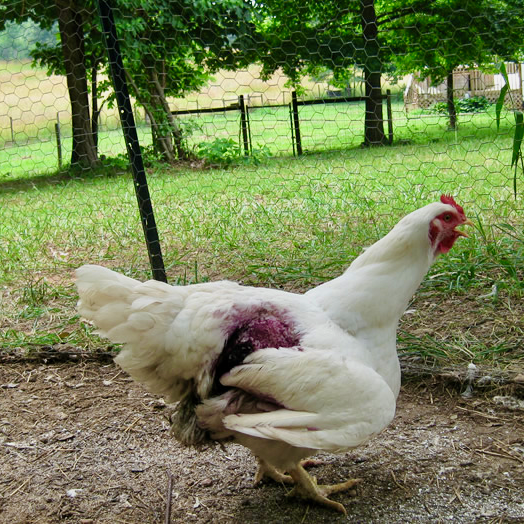
At this opportune moment, I heard The Chicks’ song “Goodbye Earl” (hey, we lived in the country) about a violent, abusive husband and the strong women who make him disappear. It was pretty clear that our Earl had to go too. He was still charging me, scrapping with the young roosters, and playing rough with the the hens. And we couldn’t let him continue sexually assaulting Lucille.
But Earl walked right through that restraining order
And put her in intensive care
For everyone’s safety, we had to keep Earl away from the rest of the flock at all times. We secured the rest of the chickens in the big coop at night, and Lucille was recovering in the small coop, so we left Earl outside while we decided what to do. He was still inside the fenced yard, and we reckoned he could defend himself against almost anything if necessary. As nature would have it, another hungry coyote came along in the night and made a valiant effort at getting a chicken dinner.
Earl put up a good fight. In the morning we found a pile of white feathers, and a trail of feathers leading to the fence. There, we found Earl’s corpulent, decapitated body. We suspect the coyote got him as far as the fence and tried to drag him through it, but only his head would fit. I hoped the end was quick for Earl, and that maybe the coyote was dissuaded from taking any more of our chickens. Now, y’all who’re without sin can cast the first stone, but as grisly as the method was, I was relieved to have the problem solved.
And it turns out he was a missing person who nobody missed at all
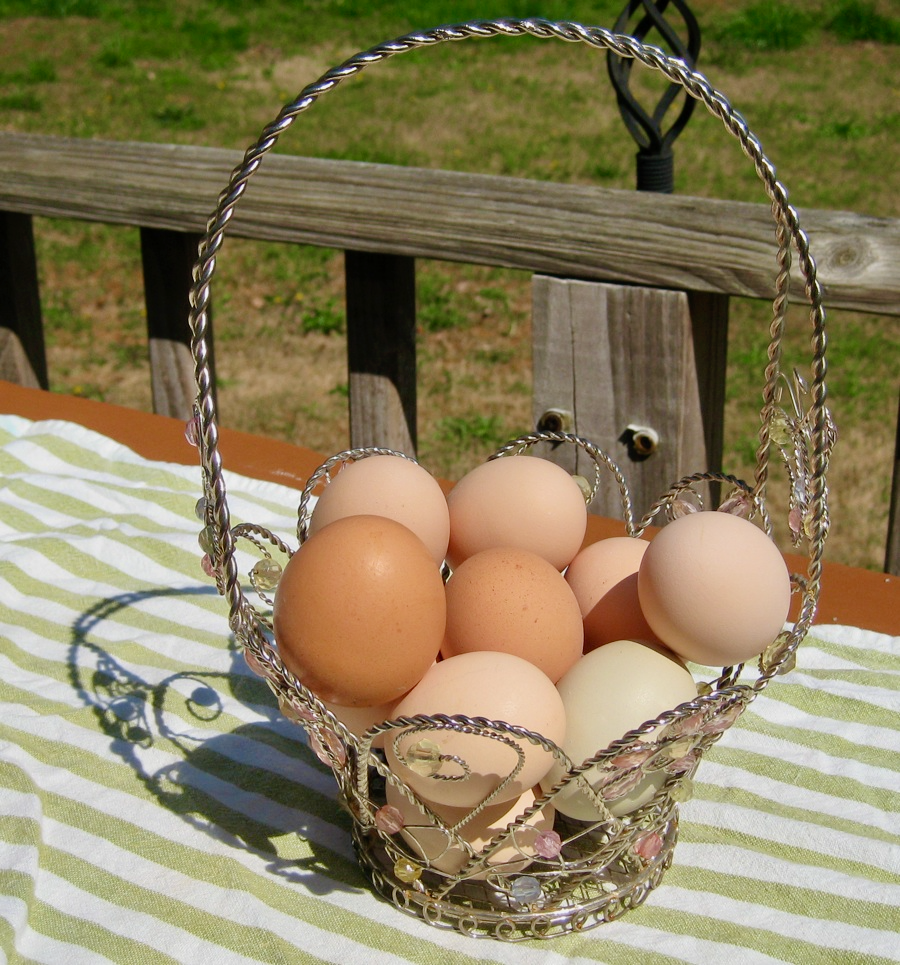
Lucille healed up just fine and lived a pretty quiet life after that, occasionally giving us one giant motherfucking egg with a double yolk. We did have some clashes between the younger roosters as they matured, but nothing like Earl’s outright aggression. Not all roosters.
Goodbye, Earl. I know you were doing what your tiny raptor brain told you to do, but our little flock was not the right place for you and your anger management issues.
Leave a Reply